Hannah Ashley Diagnosis: “Superpower Suicide” is Only Step 1 But we need transition to reimagine the collective subject Hannah Ashley May 09, 2026 Timothy Snyder in your latest “Superpower Suicide”—diagnosis 100%. My view is that the cult Snyder references was made possible by ideological paradox propagated (=propaganda) by liberal establishment, fried the brains and killed…
Organizing, and also producing the collective humans we long to be It was an amazing site, world over. Eight-plus million people saying “F no!” Now what? Here is my take on the hot takes, which—foreshadowing—are all correct, and we must get on with the business of Worlding. To summarize the hot takes: People are mobilized;…
WQR is OUT! And I don’t mean from the closet (though, what would it mean to have a book come out of the closet…) …or the humanities? I got a really nice note from a student in a class from last semester, which read in part: “Thank you so much for leaving the [our] course…
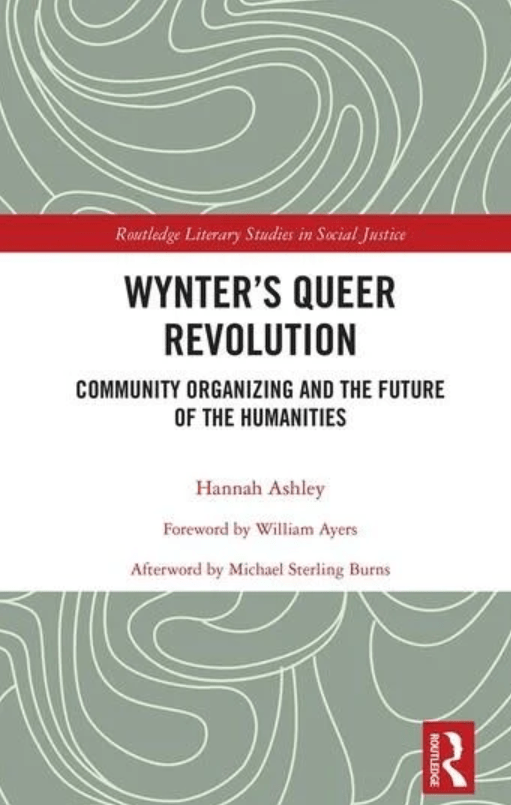
Wynter’s Queer Revolution: Community Organizing and the Future of the Humanities is a call to action and practical guide for teaching humanities in the polycrisis, emerging from the wisdom of colleagues teaching Community Change Studies at public colleges, framing praxis with a provocative vision for a generative Community Organizing Humanities.
If you have ever wondered “what’s the point of education right now?” this framework offers a new way to approach the humanities in the f*&%tangle we are in (the polycrisis, the interregnum, what have you) grounded in practices of collective struggle. (Check out“Hey there Communitarian Revolutionary Subject Texting in My Class”for a taste.)
emerges from the wisdom of colleagues teaching Community Change Studies at public colleges with Black, Brown, immigrant, and low-income students across the U.S.
provokes an undisciplined project for the humanities: cultivating “revolutionary collective subjects” through the generative insights queer theory alongside the decolonial thought of Sylvia Wynter’s demand for the humanities and education write large as “initiation” into a “new science of origin stories” for the human species